Art, Literature, A Rock, and a Hard Place.

Without hesitation, Fun Home is clearly literature, and a brilliant example of it. Alison Bechdel does a phenomenal job developing her characters and their relationships with each other through the use of words, leaving the setting to be described through the use of visuals. Although a visual depiction is present, her writing is a necessary and effective tool in telling her story. Various definitions of the word “Literature” that I found online defined them differently. While one definition described it as “written works,” another said that literature is simply “books and writings.” Alison includes visuals in her memoir, but only as supplementary tools to help her achieve the best representation of her memory. An example of this would be her house. She could have used words to describe all of the rooms throughout the house, carefully describing each item in the house that was interesting, but instead chose to show drawings of the house and her presence in the house. Doing so allows her to let readers interpret the house and how she reacts to different parts of it by simply analyzing each picture, and how the narration above or within it correlates with the scene on that page. Continue reading

Structure Matters

“Where is the line between art and literature/creative nonfiction?”

All literature is art, but not all art is in the form of literature.

All creative nonfiction is art, but not all creative nonfiction has to be in the form of literature. A painting of a historical event could be considered creative nonfiction but not literature.

Bechdel’s Fun Home happens to be a piece of art, literature, and creative nonfiction all at the same time. Art implies an aesthetic aspect, and Fun Home is definitely aesthetic by both its graphics and its language and literary devices. Bechdel’s graphics and story-telling is able to touch the reader on an emotional level and convey meanings that are so much more than on-the-surface and informative. Motifs, metaphors, satire, humor, the structure of the story, and the vulnerability that drips through in the story all make the reader’s experience an artistic one. Continue reading

Fun Home: Literature, Literary, Literariness, etc.

Frankly, it would be ridiculous not to consider Alison Bechdel’s Fun Home literature. It propounds a diverse array of character dynamics—from daughter-father to husband-wife to man/woman-society to person-self—many of which deal with human conflict and speak to subjects like artistic creation, gender, sexual orientation, illusion, identity, and interpersonal connection both familial and beyond. It presents an authentic account of the residential landscape in America, sculpting a household setting that evolves into its own character and autonomous presence. It embraces readers, welcoming them in with intimacy, honesty, and open arms like a close-friend or lover. It is witty and cultured, contemplative and hilarious, tragic and inspirational. It is a poetic, pictorial meditation on self and family enriched with more literary aptitude than it can rightfully handle. It is literature. I’m sure of it.  Continue reading

Literary Doodles

As a fan (but only occasional reader) of graphic novels myself, you’d be hard pressed to find a time when I’d renounce the medium as lacking in literary merit. Allison Bechdel’s Fun Home is no exception. I would never say that the contents of that book are any less valuable than any traditionally written coming of age story. The beauty of a graphic novel is that at its best it can be a beautiful fusion of visual art and literary genius; though Fun Home is presented in a style reminiscent of Sunday Funnies, it is this adherence to her own style that is endearing to Bechdel’s narrative. Continue reading

Rant on Absolute Truth

The more I think about it, the more I do not comprehend how some people can believe that there is no absolute truth.

There are subjective truths–beliefs that hold true to any individual.

There are objective truths–things or events we can observe (excluding our interpretation of these things or events).

Subjective truths can be lies. Or maybe to some people, there are only subjective lies.

But then, if you believe that there are only subjective truths and no absolute truth, isn’t that belief in itself an attempt to state an absolute truth?

Someone must be wrong, someone must be right. Continue reading

☢ Fools Gold ☢

“So if it’s a touch of reality that isn’t pretty, then we want to get rid of it”

– Senator Dina Titus (D-NV) from About a Mountain by John D’Agata

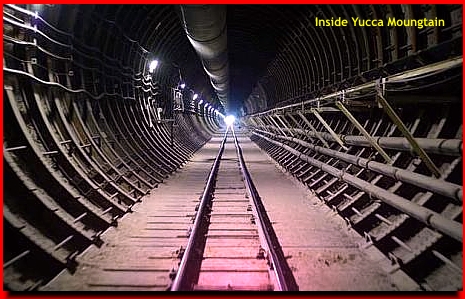
As children, we all discover the sad reality that, a lot of the time, what you get on the inside isn’t as nice as you thought it would be due to a very flashy outside. I learned this many times with toys. What’s inside, hidden beneath foam wraps and secured by zip ties, doesn’t look like the computer edited and airbrushed toy those spiky haired kids on the box are going crazy for. The same can be said for the City of Las Vegas. Continue reading

John D’Agata: A Literary Artist and Outcast

It is no secret that a lot of the facts presented in D’Agata’s About A Mountain are inaccurate.  Contrary to Lauren Slater, John D’Agata is not lying in order to manipulate the truth.  He isn’t lying about things he “believes to be true”, nor is he lying in an attempt to provide us with an accurate account of his feelings.  In fact, he rarely even addresses his own feelings.  So why?

Rejected by a magazine for his factual inaccuracies, D’Agata defends himself with artistic license.  He changes important facts in order to paint a picture.  If it sounds more poetic to say four people die of a heart attack on a particular day rather than eight, D’Agata doesn’t really give a damn.  It is important to note though, that he does this not only with small facts, but with major characters and personas as well, which is why we hesitate to accept it as nonfiction.  At the same time, calling it a work of fiction would definitely be a hard case to make.  About A Mountain is such a contemporary piece of literature, that I think it would be wrong to call it anything but a work of literary art.

Continue reading

Truthful Lies Within Notes

As a reader of John D’Agata’s and a student in a creative nonfiction class, I do find it a bit hard to take in the truth of D’Agata’s note section at the close of his story, About a Mountain. Though it is arguable that this piece can be treated as a piece of fiction as he admits to the fabrication and alteration of information within the text, I still believe that this book merits classification as creative nonfiction. I say this because authors within this genera must create a story of truth meanwhile being allowed to insert their creativity and authorial intent so that they may give their readers a factual story through their own personal lends. Continue reading

Roxane Gay Twitter Q&A

109px-Roxane_gay_9134940Roxane Gay, author of the 2014 essay collection Bad Feminist and former essays editor of The Rumpus, took to Twitter yesterday to share a few common reasons for why some essays are rejected from lit journals. This might be helpful for any of you thinking of sending your work out, or even if you’re just writing nonfiction for yourself/a class and want to work on some revisions. Check out the Q&A here.

What Counts as Truth?

In his notes, John D’Agata reveals he conflates time and uses composite characters throughout About a Mountain. How does this deviation from the truth affect the way you view D’Agata’s story (is it a deviation)? Does revealing this information make it “okay” for the text to still be considered CNF? How would you react if D’Agata didn’t attach the Notes section, and you later found out he altered these details?

Continue reading