Speaking to the Truth

In the modern era, society has found itself dissatisfied with the plain text that comes from reading a book. For just a few dollars, one can enjoy nearly any story of their choice as an audiobook, or even as a movie. In both cases, there is one similarity: voice. The human voice has the ability to carry so many various inflections and variations that, in many ways, it is the sum of all human communication.

Continue reading

Why do we really read and listen?

Koenig is very much in the same position that we all are as listeners, she’s in control of how the story is presented, but ultimately, the ending is completely independent of both author and listener. While we were discussing authorial intent we were critical of reality televisions and that they were not accurate in the way that they were being presented. Most agreed that their entertainment value outweighed the truths of both character and narrative. Well isn’t this true for creative non-fiction writers? To an extent the same applies to Didion and Thompson who are part of the stories that they are telling, they may, in some instances lead certain writers to change/manipulate their own lives for the benefit of their story or maybe something else…

Continue reading

Chasing Truth

(In the spirit of Valentines Day…)

“What’s the most important thing in a relationship?”

Many people would agree that the answer is trust, or honesty. Interestingly, the same answer could be given when “relationship” refers to the relationship between an author and his audience. If we did not believe in what the author is saying, why even bother to read or listen to what he has to say? This does not only go with nonfiction, I speak for fiction works too. By “believing in the author” I don’t mean believing that the author is telling facts or giving us an unbiased reality. What I mean is that the audience believes that the author is being honest, that the author has a message he believes in that he wants to convey.

Continue reading

Serial and the Dynamics of Nonfiction

Experiencing Sarah Koenig’s expressive and detailed recounting of the events that transpired January 13, 1999 has expanded my perspective of nonfiction and how the genre can use a hodgepodge of mediums to convey meaning. Koenig’s Serial, for instance, combines a meticulous blend of analytical/humanizing rhetoric, music, maps, documents and various other forms of multimedia  to sculpt a complex narrative that we, the listeners, can sit back, absorb, contemplate and interpret at our own leisure. The way Koenig and her colleagues deliberate upon these variables, however, has certain implications at the level of storytelling that differ from traditional, script-based nonfiction. In particular, Serial guides us down its very delineated path with more of a push and a pull than its manuscript counterpart could ever muster. For instance, the perennial introduction with its sharp, exciting score and manner of rehashing previous episodes—”previously on Serial…” and “This is a global tel link prepaid call from… Adnan Syed… an inmate at the Maryland correctional facility,” being constants after episode one—frames the show with a grain of drama, show and glamor reminiscent of popular television. As a microcosm of the podcast’s entertainment value, this narrative device on one level lures me into the next episode at an almost obsessive rate: it engrosses me, entices me, turns me into a giddy and (usually) stringent listener who acknowledges this story as powerful and endearing. Regardless, though, another side of me sees this as gimmicky and exploitative, a way in which manipulative show-artists catalyze the tragic events back in 1999 for the sake of meaningful entertainment. Perhaps it is both. Continue reading

Approaching Serial

One of the most important aspects of a piece of writing is, time and time again, the author’s voice. When reading a piece of writing, the presence of the author’s voice depends on factors such as the level of skill involved, the subject, and even a little subjectivity on the readers’ part. But Sarah Koenig, in narrating her podcast Serial, ensures that her voice is quite literally present throughout the story at the cost of losing our interpretation of certain aspects. The question of the value of narration, either to the bane or benefit to the overall story, comes down to a matter of personal preference.

Continue reading

CNF, Poetry, Voice, Confessional: A Fledgling Prose Writer’s Take

I’ve been thinking a lot about voice in CNF. When do you step outside the first person POV? How do you truthfully embody your own childhood voice or past self? How can speculation function? I think that this has to do with the “what” of an essay. Form and content push and pull and ultimately must support each other. They’re like sisters in the backseat being dragged by mom and dad on a garbage road trip. Continue reading

The Truth in Lies/”You Have to Ride the Wave”

People often confuse New Journalists with actual journalists. Joan Didion’s Slouching Towards Bethlehem is never meant to be a series of hard-hitting journalism, otherwise Didion would not reveal that she is “bad at interviewing people” (xiv) and that she dreads the whole process. No, it is a series of very personal accounts that aim to reveal California and in turn the state of the world as Didion herself sees it. Granted, the insistence to use quotes and source them in “Some Dreamers of the Golden Dream” may make it seem as though Didion is presenting the facts as they are and allowing the reader to come to their own conclusions, but to focus only on the incident about which she is writing is to do a horrible injustice to Didion as an author. Continue reading

The Colbert Report, Didion, & Serial in Place of Shakespeare

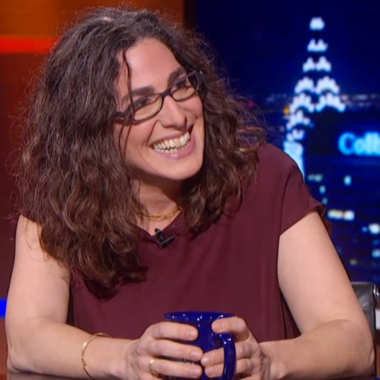
Koenig 2As we’re all knee-deep in the first few episodes of the Serial podcast, I stumbled across a video of Serial host Sarah Koenig being interviewed on The Colbert Report. While Colbert doesn’t dig too far into the details–he mainly jokes about how Koenig has become a celebrity in the podcast world–the truth stands: Koenig has become a celebrity in the podcast world. She was invited to talk on The Colbert Report, after all, one of the most mainstream TV shows in America (mainstream, that is, until the show came to an unfortunate end). Continue reading

When it Comes to a Murder Conviction, More Facts, Less Fiction Please

The hook of Sarah Koenig’s podcast Serial  is her (and her production team’s) meticulous investigation into the details of the state of Maryland’s story of how Adnan Syed murdered Hae Min Lee in 1999. Koenig lets the facts–or the mushiness of them–complicate the story to the point that her audience is unsure of who murdered Lee, confident only that the prosecution’s case against Syed is less than conclusive.

I have to think that Adnan’s being granted an appeal just this week has at least something to do with Koenig’s thorough scrutiny of the details of the story at the heart of Serial. If breathing new life into a murder trial long since adjourned isn’t an indication of the power that the presentation of research in nonfiction can have on an audience, then I don’t know what is.

Didion’s perspectives and selling others out

The idea that a writer is selling someone out as a means to write may in fact be true, though the means in which they do this may also lead an individual to believe that they are not selling them out, but telling ones store through their own personal lends. We all poses a different lends from that of our friend, brother, mother, or neighbor. The way in which we perceive things is how we then tell a story as Didion does throughout her essays in, Slouching Towards Bethlehem. This idea is evident all throughout her essays. Continue reading