Lies Lying in Truth

We don’t know what’s true or what’s false in Lauren Slater’s creative memoir Lying. Slater dedicates an entire page/chapter to the statement “I exaggerate,” which is the only statement we can comfortably take at face value, given the nature of the statement. Our author makes many claims, confirming none, but going back on enough that we as readers are forced to assume that everything she says is a lie. So why read what she has to say? What’s the point of reading a memoir if almost none of it is true? Well, first, we should understand why we read memoirs at all. What’s the point of reading a memoir? How is a memoir different from an autobiography? Continue reading

Lies in Lying

I’ve been dwelling a lot on our conversations on the importance (or lack thereof) of Slaters’ diagnosis of epilepsy. By now I think we can mostly agree that whatever shred of epilepsy was in her life has been exaggerated for the story. I don’t think she had it, but I think it deserves more merit than just a metaphor. I’ve been toying around with the term “emotional truth” in regards to this; she explicitly states that not only is emotional truth different than the factual truth but that it is superior. We see Slater struggle with the false memories coming to her during her seizures and we realize that not only are we, as readers, are armed with a necessary skepticism when approaching the subject matter of this memoir but that she, as an author and a human being, must approach the very “facts” of her life in the same fashion, constantly questioning whether something ever truly happened.  Continue reading

The Able Disabled

I’ve just finished reading the Huffington Post article Virginia To Compensate Victims of Forced Sterilization. This particular paragraph stirred up the most emotions in me:

“The Virginia eugenics law was upheld in the 1927 Supreme Court case Buck v. Bell, in which Justice Oliver Wendell Holmes Jr., writing for the majority, famously declared: “Three generations of imbeciles are enough.” (paragraph 16)

disabled (adj.)
(of a person) having a physical or mental condition that limits movements, senses, or activities (Google)

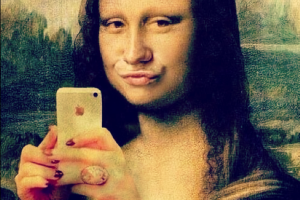
It sickens me that people would think people with “disabilities” are any less than people without “disabilities”. What right do you have to look down on people who are overcoming obstacles in their daily lives that you never have to go through? Besides, the truth is, we all have “disabilities”, and many of us have much moremonalisaducklips serious problems than those whom we label “disabled”. For me, the girl who is obsessed with taking 999 selfies every day is more blind than a person with eyes that cannot see. Her mental condition (self-centeredness, vanity) limits her senses of true beauty and her ability to love herself and others despite their appearance. People who cannot view “disabled people” as people of value have more “disabilities” in their thinking than all those people they look down upon. Continue reading
The Times, They Are A Changin’

Joan Didion’s portrait of the “hippie movement” is not just that, but it is a portrait of a changing America.  Within a story of “trips” and runaways, Slouching Towards Bethlehem is an example of the generational differences in the late 1960s.

Speaking to young runaways at a Grateful Dead concert, she hears of the different ideologies they have than their parents.  Chores seem to them a daunting and unnecessary task.  Consequences for below average grades were “a bummer.”  The teens tell of how they aren’t going to plan for the future, “we’re just gonna let it all happen.”  You can tell that Didion feels some sort of sympathy towards their naivety. When she writes “I finally ask it. I ask them to think back to when they were children, to tell me what they had wanted to be when they were grown up, how they had seen the future then.”  It’s as though their innocence is lost, and with it, all sense of direction.  Didion’s readers would have felt a heart-wrenching feeling of how they could be their children someday, look at what the hippies have done to them. Continue reading

Documentary Poetry & CNF: Two Different Genres?

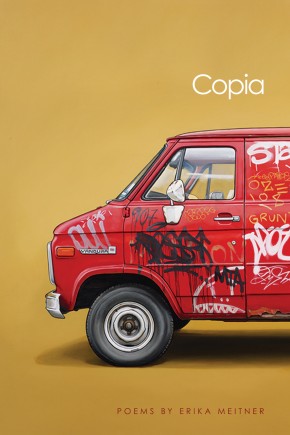
CopiaWhen I was in the Poetry Workshop last semester with Lytton Smith, we read two poetry collections with documentary or journalistic elements–one of which was Erika Meitner’s Copia. In her collection, Meitner intervweaves personal anecdotes about materialism, desire, and home with researched information on Detroit and, even, a verbatim interview with a Detorit automobile factory worker.

Recently, Lytton asked if I’d be interested in doing a documentary poetry reading and discussion at this year’s GREAT Day. All last semester, between taking Steve’s Lyric Essay class and Lytton’s Poetry workshop back-to-back, I was researching and writing about Sonyea’s Craig Colony for Epileptics for a directed study and a lot of what I was learning transferred over to both my essays and my poetry. And, sometimes, an essay would prompt a poem or a poem would help inform an essay. Because of this, I’ve realized how fluid the borders separating creative nonfiction and poetry really are (just look at a lyric essay or a prose poem and you’ll know what I mean). Continue reading

“Sherman’s March” as Fiction

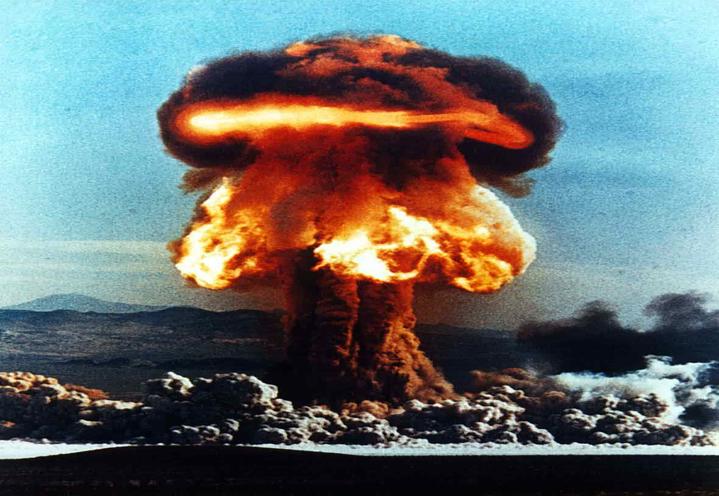
In an interview I recently read, Ross McElwee briefly discusses the possibility of making his documentary, Sheman’s March, into a fiction film and/or a fictional cable series. Some interesting points were made about the purpose behind doing this.  During the Cold War, the idea of nuclear warfare had everyone in a panic.  McElwee’s documentary brings a lot of attention to this.

Interestingly enough, they go on to talk about how there’s actually a much higher risk of nuclear war today than there was during the Cold War.  Yet, most people today remain pretty unconcerned and subsequently unaffected by the fear and anxiety McElwee tells us about.

I agree that this would be an interesting idea to explore for a fiction film or series.  However, it’s my opinion that it would take a lot away from McElwee’s work to make it anything other than what it is.

A lot of the reason’s that Sherman’s March is so successful can be credited to the style he uses.  The idea of it being a personal documentary that captures real people and their real beliefs gives it a lot more validity.  Being non-fiction says a lot for the work.  Making into a fiction flim/fiction series would take all the legitimacy of genuinely displaying a ‘Meditation on the Possibility of Romantic Love In the South During an Era of Nuclear Weapons Proliferation’.

A Meditation on the Possibility of Romantic Love In the South During an Era of Nuclear Weapons Proliferation

“This is not art, this is life!” – Charleen

Some might be confused by the name: Sherman’s March

 shermansmarchaI think Ross McElwee made the right choice in the naming of his documentary. Not only did he tear grant providers a new one in the making of his film, but he also shed light on the the absurdity of preceding educational documentaries which were basically art sinks.

Continue reading

McElwee’s March

Sherman’s March, a documentary produced by Ross McElwee is not in fact about General Sherman’s march to the sea, but about McElwee’s journey through the south in search for love interests. The majority of the film, McElwee is basically stalking several women trying to find love. His mother becomes involved at one point, too, because she thinks he is wasting his life and should already be married. Though to be fair, the setting of the film happens to take place near several historical locations of General Sherman’s march during the Civil War that McElwee throws in random facts about it.

Continue reading